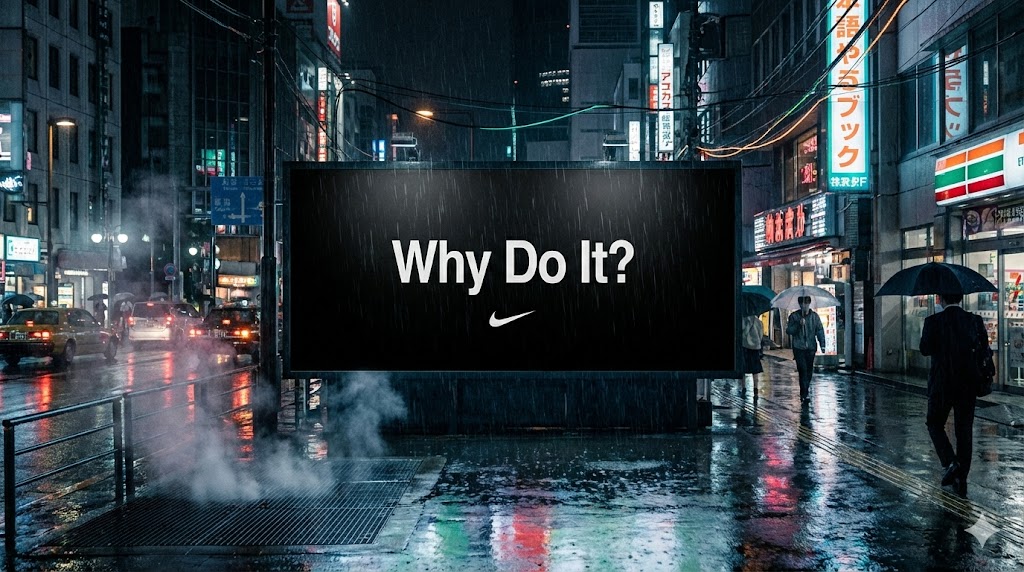
For over 35 years, Nike has shouted at us. The imperative command “Just Do It” became the most recognized slogan in advertising history, synonymous with grit, sweat, and pushing past physical limits. It was the anthem of the hustle culture.
But in late 2025, the shouting stopped.
With the launch of the “Why Do It?” global campaign, Nike has executed one of the most significant strategic pivots in modern sports marketing. Gone are the high-speed montages and aggressive trap beats. In their place? Silence. Breath. And a simple, haunting question: Why do we put ourselves through this?
This article analyzes the cultural and psychological drivers behind this shift and what it tells us about the future of brand storytelling.
The Campaign: Anatomy of a Quiet Revolution
Released in September 2025, the “Why Do It?” spots feature global icons like LeBron James and rising cricket superstar Shreyas Iyer, but not in the way we are used to seeing them. We don’t see the game-winning dunk or the century run. We see the quiet moments before.
- Visual Style: Slow-motion cinematography, natural lighting, and close-ups on eyes and breathing.
- Audio Design: Minimalist. The sound of a heartbeat, the tying of shoelaces, wind rustling. A calm voiceover asks questions like, “Why risk the injury?” or “Why wake up at 4 AM?”
- The Answer: The ads don’t give a definitive answer. They leave space for the viewer to find their own internal motivation (“The Why”).
Why The Pivot? The “Burnout” Factor
Why would a brand abandon a winning formula? The answer lies in Generational Shifts.
1. Gen Z and the “Soft Life”
Market research in 2024 and 2025 showed that Gen Z and Gen Alpha are increasingly rejecting “Hustle Culture.” They prioritize mental health, balance, and intentionality over blind ambition. A slogan like “Just Do It” can feel demanding or toxic to a generation dealing with high levels of anxiety. “Why Do It?” validates their feelings and invites them to find meaning, not just results.
2. The Rise of “Mindful Fitness”
The fitness industry has moved away from punishment (CrossFit intensity) to restoration (Pilates, somatic movement, recovery). Nike had to align its brand voice with this new reality. They are positioning sport not as a war against the body, but as a conversation with the self.
Strategic Risk vs. Reward
Changing a 30-year-old brand identity is incredibly risky. Let’s look at the SWOT analysis of this move.
| Strategic Element | The “Old” Nike (Just Do It) | The “New” Nike (Why Do It?) |
|---|---|---|
| Primary Emotion | Adrenaline, Aggression, Triumph | Calm, Focus, Clarity |
| Target Audience | Competitors & Athletes | Wellness Seekers & Everyday Movers |
| Brand Role | The Coach (Pushing you) | The Therapist (Understanding you) |
The Digital Response
The campaign has polarized the internet—which is exactly what a viral campaign should do.
The Critics: Some legacy fans argue that Nike has “gone soft” and that sports are inherently about competition.
The Supporters: Millions of users on TikTok have used the sound bite to share their own “Why” stories—recovering from injury, fighting depression, or running for a lost loved one. This User Generated Content (UGC) goldmine has given the campaign a life of its own, extending its reach far beyond paid media.

Conclusion: A New Era for Sports Marketing
Nike’s “Why Do It?” is more than a slogan; it is a prediction. It predicts that in the late 2020s, consumers will buy brands that support their mental well-being as much as their physical performance. By daring to ask “Why,” Nike has ensured that they remain the answer for a new generation of athletes.