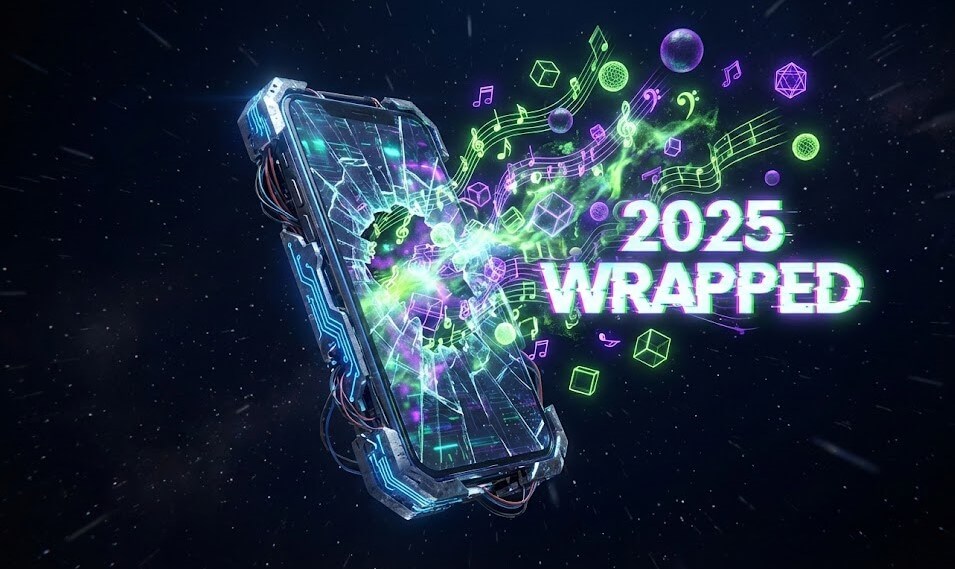
In the modern digital landscape, few events command the collective attention of the internet quite like Spotify Wrapped. Released in early December 2025, this annual campaign has transcended its original purpose as a simple feature update to become a bona fide cultural holiday. It is, effectively, the Super Bowl of data visualization.
But the Spotify Wrapped 2025 edition was fundamentally different. Facing increasing competition from YouTube Music’s “Recap” and Apple Music’s “Replay,” Spotify needed to innovate to maintain its dominance. The result? A masterclass in community-driven marketing. While previous years focused on introspection (“Here is my year”), 2025 shifted the narrative to connection (“Here is our year”).
By integrating real-time multiplayer features and leveraging the burgeoning trend of “Identity aesthetics,” Spotify didn’t just ask users to share their data; they gave them a platform to build their digital identity around it. This article provides a comprehensive analysis of the Spotify Wrapped 2025 campaign, dissecting its visual language, psychological triggers, and the strategic decisions that make it the gold standard for user-generated content (UGC) campaigns.
The Evolution of Data Storytelling: From Static to Cinematic
To understand the massive success of 2025, we must look at the trajectory of the campaign. Initially, Wrapped was a simple email sent to users with a few stats. Today, it is an interactive, in-app story format that rivals Netflix in terms of engagement.
1. Visual Immersion and AI Art
The 2025 campaign abandoned the flat design of the early 2020s for a fully immersive experience. The transition between slides wasn’t just an animation; it was a journey. Building on the “Sound Town” of 2023, 2025 introduced “Audio Aura 2.0”. This feature used generative AI to create a moving, breathing abstract shape that pulsed to the beat of the user’s top track. This transformation of raw data into abstract art made every screenshot unique, boosting the shareability factor significantly.
2. The “Gamification” of Listening
Spotify has effectively gamified the act of streaming. Users now actively stream music throughout the year—sometimes leaving tracks on repeat—not just for enjoyment, but with the subconscious goal of influencing their end-of-year results. This creates an incredible retention loop. Users fear that switching to a competitor platform would mean “losing their stats” and breaking their streak, creating a powerful defensive moat against churn.
The Core Features of 2025: A Strategic Analysis
Three specific features defined the 2025 campaign strategy, turning it into a viral sensation. Let’s break them down from a marketing perspective.
The “Wrapped Party” (Social Synergy)
The most significant addition was “Wrapped Party.” For the first time, users could merge their Wrapped data with up to five friends to generate a “Group Aura.”
- The Insight: This feature leverages Network Effects. To use the feature, you must invite others. This turns every existing user into an active recruiter for the platform.
- The Result: If a friend sends you a Wrapped Party invite and you don’t have Spotify, the FOMO (Fear Of Missing Out) is instant. It forces non-users to consider joining just to be part of the social conversation.
“Listening Archetypes” (Identity Marketing)
Spotify introduced 12 new “Archetypes” (e.g., The Time Traveler, The Genre-Bender, The Loop Loyalist). This is classic Psychographic Segmentation.
Humans have an innate desire to categorize themselves and display those categories to their tribe (similar to zodiac signs or MBTI personality types). By assigning a cool-sounding label to a user’s behavior, Spotify gives them a “badge of honor.” It transforms raw data (listening hours) into a personality trait that begs to be shared on Instagram Stories and TikTok.

Visual Language: Chaos vs. Order
The visual theme for 2025 was a brutalist mix of “Chaos and Order.” The design featured large, distorted sans-serif fonts, high-contrast neons (Acid Green, Hyper-Violet), and glitch effects. This design choice was highly strategic.
In a social media feed dominated by overly polished, AI-generated “perfect” images, the gritty, slightly chaotic look of Wrapped stopped the scroll. It felt raw and authentic. It mirrored the chaotic nature of the year itself, resonating deeply with Gen Z and Gen Alpha audiences who favor “ugly-chic” aesthetics over corporate minimalism.
Critical Reception: What the Industry Experts Say
The 2025 campaign was met with widespread acclaim, though it sparked debates regarding data privacy. Below is a comparative analysis of how major tech and marketing publications reviewed the campaign.
| Source / Publication | Verdict | Key Analysis |
|---|---|---|
| The Verge | Innovation Leader | Praised the UI fluidity and the “Group Aura” feature as a breakthrough in social app design. |
| AdWeek | Marketing Gold | Highlighted the “Merch Integration” as a game-changer for artist monetization and ROI. |
| Wired | Mixed / Cautious | Raised valid concerns about the extent of data surveillance required to build such accurate profiles. |
| Music Business Worldwide | Industry Essential | Emphasized how Wrapped drives Q4 streaming numbers up globally for major labels. |
The Psychology Behind the Share
Why do millions of people share free advertising for a billion-dollar corporation? The answer lies in Social Signaling Theory.
- Signaling Taste: Sharing your Wrapped proves you have “good taste.” It shows you listen to obscure indie bands (cultural capital) or the biggest hits (social belonging).
- Signaling Status: Being in the “Top 0.5% of Listeners” for a major artist like Taylor Swift or The Weeknd is a status symbol. It implies dedication.
- Vulnerability: Sharing your “Guilty Pleasures” creates a moment of vulnerability that invites engagement and comments from friends.
Conclusion: Lessons for Your Brand
Spotify Wrapped 2025 teaches us that in 2026, marketing isn’t just about selling a product; it’s about holding up a mirror to the consumer. When brands help users tell their own stories, the audience becomes the ad agency.
For marketers and business owners, the takeaways are clear: Personalization is king. Users do not hate data collection; they hate useless data collection. When brands take that data and return it to the user in a form that is beautiful, shareable, and insightful, the user becomes the brand’s biggest advocate.
As we move further into 2026, the question for next year isn’t “What did I listen to?”, but “How will Spotify surprise me next?”